Modern Meditations: Immad Akhund
Mercury’s CEO on Genghis Khan, the limits of growth, and the secrets of excellence.
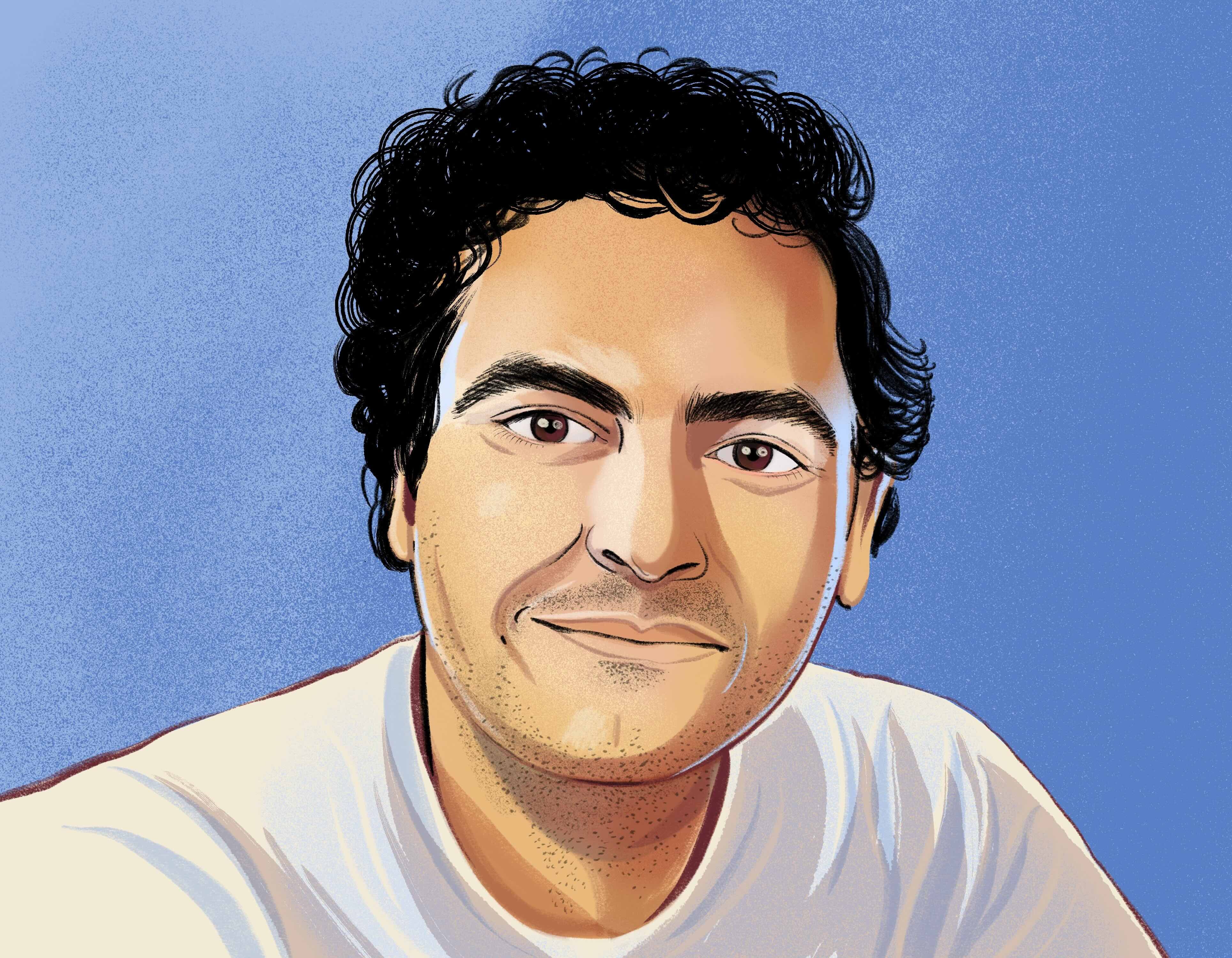
Friends,
How often do you think about the Mongolian Empire?
For Mercury CEO, Immad Akhund, the answer seems to be “surprisingly often.” For our final interview of the year, I asked the founder of one of my very favorite products to share his latest obsessions, contrarian opinions, and favorite reads.
As well as outlining the historical factors that gave rise to Genghis Khan, Immad shares the critical trait that has helped him scale as a CEO, how he studies excellence across fields, the importance of finding a “river of ideas” to situate yourself in, and the contemporary American monument he believes surpasses the Pyramids of Giza.
This is part of our “Modern Meditations” series, which asks some of the world’s most interesting people unusual questions that surface new aspects of their personality. If you like today’s edition, you might enjoy our interviews with Tyler Cowen, Bryan Johnson, Chris Miller, and many others.
Brought to you by Mercury
Your ambition doesn’t clock out when you close your work laptop.
It follows you into the rest of your life: the home you’re creating, the future you’re planning, the personal pursuits that keep you going.
Mercury Personal* exists for exactly this — for those who bring as much energy into their personal lives as they do their professional ones. Create sub-accounts for every goal or project, set automations that keep those plans funded, and collaborate via a joint account with the partners you build life with. A high-yield savings account in the same place helps you seize every opportunity to grow. Need to extend spending access to a nanny or assistant? Set the amount and cadence that works for you.
Finally. Personal banking designed for every side of life.
*Mercury is a fintech company, not an FDIC-insured bank. Banking services provided through Choice Financial Group and Column N.A., Members FDIC.
Modern Meditations: Immad Akhund
What would you be doing if you didn’t work in tech?
I don’t think of myself as working in tech, necessarily. To me, it’s more about building companies and trying to deliver value to humanity in that way. Maybe this is an overly positive view of capitalism, but I think it’s hard to make something successful as a company without delivering value. The only reason a startup is able to beat an incumbent is because you’re creating value – through a new product or better pricing, or some combination of those things.
The truth is that I’m addicted to the grind of building a company like Mercury. But if I didn’t want to do that anymore, I could imagine enjoying living in some seaside tourist town and running a smaller business. When I was about 20 years old, I went to Sardinia and learned to scuba dive. It sort of opened my eyes to the fact that this was a possible life option. I’d been studying computer science at university and had assumed the path was to get an office job. My dive instructor seemed to have a good life – serving tourists, making good money, and doing things on his schedule. For a moment there, I considered what my life could look like doing something like that.
Maybe I’m romanticizing it too much, but I’ve chosen to live my life on hard mode, and this feels like it would be a good change of pace. I would probably get bored quite quickly, though.
Which current or historical figure has most impacted your thinking?
One of the most important things in life, and entrepreneurship especially, is not to try to copy someone else. I think you should try to immerse yourself in a river of ideas. Your ideas will be shaped by other people’s ideas, but it’s not about copying them.
Y Combinator was a place that brought me into that river. When I first went back in 2007, it was still small. There were 20-25 people per batch. Every week, they hosted a dinner with someone great – people like Mark Zuckerberg and Jack Dorsey. I’m the kind of person who likes to sit in the front row and ask questions, so it was an amazing chance to get to do that. Coming from London, it felt particularly special to have access to all of these extremely successful people. I’d never had the chance to talk to a really successful entrepreneur at that point.
Even after my batch was over, I showed up to almost every interesting dinner for the next two years. There were no real rules back then about who could or couldn’t come, so I tried to go to all of them. Hearing everyone’s stories and getting to ask questions was so informative.
There are two dinners that especially stick in my mind. The first was with Zuckerberg. In those days, Facebook was this insane rocketship, but it hadn’t made it. It was really inspiring to see someone who was my age have that kind of success. It felt attainable, especially when you see these people in real life. They’re obviously remarkable, but at the same time, you realize they’re not in some other universe. They seem much more normal.
The other one was Mitch Kapoor, who started Lotus Software. It was cool to see someone from the previous generation and hear ultimately similar stories of competing against people like Microsoft. It was powerful to see that when you get down to the foundations, entrepreneurship was really the same forty years earlier as it was at that time.
Outside of those dinners, I’ve learned a lot from reading biographies. I like studying the underlying patterns that lead to success. I’ve read a lot of the ones about entrepreneurs, of course. On Elon Musk, Steve Jobs, Phil Knight, and Ted Turner, for example. But I’m really interested in people who reach excellence in any discipline. I enjoyed Stephen King’s book on writing, Andre Agassi’s autobiography, and The Red Hot Chili Peppers’ story.
Once you get to the far edge of excellence, I really feel like the stories are fairly similar. It’s all about perseverance through difficult times and overcoming self-doubt. There’s this societal idea that creativity is something you just wake up with. One day, you wake up with a song in your head, or something. It’s cool to see that whether you’re building technology or writing music, it’s about waking up and grinding for ten or eleven hours, and then doing it again the next day. It really comes down to working extremely hard and being unwilling to give up when others would.
What piece of art can you not stop thinking about?
John Collison had this tweet that I think about quite a lot, about how making anything in the world is just so hard. And, as a result, the things we have exist only because they’re the product of someone’s deep, deep passion and drive to bring it to reality. Because of that, I really feel as if there’s art everywhere.
One piece that I’ve been really impressed by is the Sphere in Las Vegas. I haven’t been in person, but I’m really struck by it. There’s this idea in the US that we can’t make things, and this is counter to that. For one thing, it’s freaking huge. It also seems so original. Maybe something like it exists elsewhere, but I haven’t seen anything like it before. The way they’ve seemed to use both the inside and outside is really creative and interesting.
To me, it’s more impressive than the Egyptian pyramids. Obviously, it’s not going to last 2,000 years, but conceptually, I find it so cool and creative.
What are you obsessed with that others rarely talk about?
The Mongolian Empire. I’ve read a bunch about it. I just finished this historical fiction series called Conqueror by Conn Iggulden, which I really enjoyed.
The Mongolian Empire is super crazy. People are impressed by the British Empire, which was obviously impressive. But at some level, it’s also easier to understand how it came together. The British were on an island and, as a result, had a natural incentive to develop naval power. Then industrialization came, and that allowed them to extend that power. It makes sense.
But the Mongolian empire is just completely insane. They were this tiny tribe on the edge of livable land that somehow ended up conquering all of Eurasia. I am a layman historian saying all of this, but it was a combination of factors that allowed this to happen. Environmentally, they were based in a part of the world that was extremely contested. For hundreds and hundreds of years, there had been fighting between tribes, and so they effectively honed their military abilities through the brutality of their local environment.
The second factor was that beyond that area, many of the surrounding civilizations had become a bit soft. The Chinese Empire had been around for a long time and hadn’t needed to fight many wars. As I recall, that wasn’t as true on the Middle Eastern side, but by that point, they had more money and troops to wage an effective war. Generally, though, the world around them was soft enough that they could be the hard edge into it.
The last factor is the character of Genghis Khan. He managed to unite the steppes, which had happened before but very rarely. And he just had this insatiable appetite to say, “We’re not done.”
The empire didn’t last that long. Within a couple of generations, there was no empire anymore.
What is the most significant thing you’ve changed your mind about over the past decade?
Ten years ago, I think a lot of us felt like we’d come to the end of history. I grew in the 1900s and 2000s, and obviously, we had the war on terror and things like that, but there was the general sense that we lived in a safe world that was trending toward democracy, freedom, peace, and prosperity for everyone. There was a more globalist mindset.
In 2016, that broke. Brexit, the initial Crimean war, and rising tensions with China all contributed to the sense that, actually, maybe we were just burying our heads in the sand in some way. It was sad in some ways, but I think we realized that maybe we’re not done yet – that history hasn’t ended.
What craft are you spending a lifetime honing?
Learning new things. And, on a meta-level, learning how to be a better learner of new things.
The reason I decided to build something in fintech originally was because I’d never done it before. My previous two companies had developer tool components to them. I also had familiarity with adtech and gaming. It would have made more sense to build a company that leveraged those skills. But I really value learning something new.
A big part of being the CEO of a scaling company is that you continuously have to learn. The job I do now is not the job I had last year. You have to be the Chief Problem Solver and Chief Opportunity Chaser. It’s the nature of it.
On the meta level, I’ve learned that I’m a conversational learner. I like reading, and I’ll happily read a book if I need to, but my favorite way of figuring something out is to find experts and pepper them with questions. If I wanted to launch a newsletter, I’d go and talk to you and Dwarkesh, for example, and just ask questions.
What is your most contrarian, high-conviction opinion?
That the world is, ultimately, pretty good. And most people, in America and the West, have much more to be grateful for and optimistic about than we typically admit. As humans, we always find things to complain or worry about. But our fears today are not as severe as those of our ancestors. We don’t have to worry that a Mongolian tribe is going to come kill us in the night and capture our families. Our worries are mostly that we’re getting too fat because we’re eating too much.
There’s this chart that I find amusing that shows that if you ask people how well the economy is doing, something like 80% will say that it’s trash. But if you ask them how they’re doing, a similar number will say, “I’m great!” We can be really pessimistic about the state of the world when the reality of our lives is good.
Enlightenment Now by Steven Pinker was an interesting read on this subject. The book talks about how we don’t tend to talk about things that gradually progress and improve. Knowing that poverty decreases a little bit each year isn’t something that captures our attention as much.
History hasn’t ended, and sadly, we still have wars and hardship. But ultimately, I think we have a lot to be grateful for.
What experiment would you run if you had unlimited resources and no operational constraints?
I would build a space city. Not on another planet, but as a satellite around Earth.
Getting to Mars feels far away to me, and it’s not very hospitable anyway. I think if we’re going to solve for Mars, we might as well solve for a space city first. Technologically, I think it’s probably a similar level of difficulty, but it would be more interesting. I can imagine 10,000 people living up there and benefiting from a tourism and manufacturing economy. We’d be able to go up and down and have more people experience what it’s like to be in space.
I thought about whether there were any wild, no-constraint experiments I’d want to run on Mercury. The truth is that I think constraints are really important. There are certain limits beyond which I think you lose productivity. For instance, we’ve grown our number of employees by between 30% and 40% every year since about 2021. It might feel tempting to have 1000x the headcount, but realistically, I don’t think you can productively absorb much higher employee growth than 40% anyway. What I’ve noticed is that when we grow headcount faster than that, we end up making no additional marginal progress because we spend so much time on hiring and onboarding.
I think there’s a lesson in the fact that more and more resources often don’t increase speed and productivity.
What’s an underappreciated corner of the internet?
I don’t know how underappreciated this is, but audiobooks are great. I get through so many books by squeezing in 15 minutes while I wake up and brush my teeth, or 30 minutes while I’m driving. I like to listen at 2x speed, so getting in 30 minutes is really like an hour.
I’ve read about five books in the last three weeks, and there’s no way I could do that if I were reading them. It’s a nice meditative break during the day. I’ll get to jump into some story where someone’s been captured by Napoleon and is being carted off to their death. It’s a fun distraction.
If you had the power to assign a book for everyone on earth to read and understand, which book would you choose?
I’d like to pick something that encourages people to be more optimistic and curious. Those are two values I really appreciate. Enlightenment Now would make people more optimistic, I think. I’m not sure what book might make people more curious.
What will the next generation do, or use, that is unimaginable to us today?
I went to South Korea in 2009, and I remember being struck by everyone staring at their smartphones. Even standing at a urinal, the people next to you would be looking at their smartphones. It was the first time I’d seen this kind of behavior, which we now obviously see everywhere. I went to a concert with my fourteen-year-old recently, and everyone had their phones in front of their faces. Twenty years ago, that kind of behavior would have been unthinkable.
I expect the same thing will happen with AR glasses. In the long term, maybe it will be with a brain-computer interface or something. But I think we’ll just want to have our technology closer and closer to our visual senses. I don’t see anything stopping that.
I tried out Facebook’s Orion glasses recently. It’s got a little screen in your field of vision. It’s still crappy, but it’s getting there. Give it three or four more generations, and I think it could be pretty impressive. I think we’ll be living in a world where instead of people staring down at their phones, you’ll be on the Tube, and everyone will be standing there, looking into their glasses screen.


