
Terra: The Moon Also Rises
Terra may have the biggest TAM in crypto. But it comes with real risks.

Editor’s note: This piece was written in November 2021, six months before Terra’s subsequent meltdown. Though painful, we have kept it up as believe there is value in showing our thinking at the time, the view of the broader market, and the narrative Terra advanced. We reflected on crypto’s fallout, rampant fraud, and obsession with speculation in “The Casino and the Genie.” Though that piece focuses on the FTX collapse, its also serves as an unofficial coda to our Terra story.
“It’s the biggest TAM in crypto.”
Early in my research, I asked one expert what people most frequently miss when digging into Terra. What do they overlook?
This was his response.
This expert is not prone to exaggeration, and he is, as the designation suggests, extremely well-versed on the subject. At the time, I did not fully grasp his rationale for that position, but after hours of research, discussions with Terra’s leadership, and conversations with many other crypto connoisseurs, I have come to.
Terra is building better money. Not only that, it is creating infrastructure for others to ceaselessly improve and remix it, giving it new abilities and uses. It is a blockchain and a bank and a payment processor, and a sort of technological nation-state. Terra’s contributors are just as likely to compare it to Y Combinator as they are to Singapore.
And yet, while Terra has the potential to revolutionize the financial industry and mainstream crypto adoption, some believe it is destined to fail, architected for collapse.
In today’s piece, we’ll study Terra from different angles, touching on both its strengths and vulnerabilities. You’ll hear about:
Terra’s origins. The founder of a mesh network startup and a successful e-commerce entrepreneur team-up.
How it achieved wide adoption. Millions of South Korean consumers use Terra to buy products online or at their local stores. Many may not realize they’re interacting with the blockchain.
How Terra’s UST stablecoin works. Can you create a stable currency that is backed by nothing? Terra believes so.
Its growing ecosystem. An abundance of projects is being built on Terra, bringing new lending, trading, and social capabilities.
The magic of Do Kwon. Founder Do Kwon has been compared to one of the greatest entrepreneurs of all time.
The risk of collapse. “Algorithmic stablecoins” like Terra’s have failed in the past. Could that happen here?
A powerful community. Terra’s “Lunatics” have played a pivotal role in the project’s success.
By the end, you’ll understand just why someone considers Terra to have the largest TAM in crypto.
Terra, forming
No entrepreneurial success can ever be attributed to a single person. Too many forks and inflections, favors and lucky breaks occur for that to be true. If you have to condense Terra’s story to just two animating figures, however, you cannot look beyond its two founders: Do Kwon and Daniel Shin. They are the project’s yin and yang, Terra’s very own earth and moon.
Do Kwon and the quest for decentralization
Drive two and a half hours out of Seoul, and you’ll find it: Everland. Every year, nearly 6 million visit South Korea’s most popular theme park, making the journey to explore its various “zones.” A guest might spend an hour in Everland’s “American Adventure” neighborhood, listening to 1950s music and riding the “Rodeo,” before heading over to “Magic Land” and its looming Ferris Wheel. In the afternoon, a traveler might choose to inspect the animals at “Zootopia,” feeding a rabbit, riding a pony, watching a depressed polar bear paddle in tepid water.
Everland is an unlikely venue for one of the crypto world’s most consequential founders’ early successes — as if before Ethereum, Vitalik Buterin triumphed at Epcot.
Still, Do Kwon must have been pleased at the time. Just a few years after receiving his Computer Science degree from Stanford, Kwon had not only started a business but secured a major operation like Everland as a client.
That he was running a startup at such a young age would have been little surprise to those that knew him. He is, by all accounts, an intensely driven person and seems to have been for quite some time. By Kwon’s estimation, he was an extremely ambitious student with a willingness to work long hours. After graduation, he was disappointed to find that ferocity lacking at Microsoft, his first employer. In our conversation, he recalled being stunned to discover that on his team of 40 engineers, just four were doing what he considered “real work.”
Bored and restless, Kwon decided to work on something worthy of his efforts — he would have to build it himself. The result was Anyfi.
The company’s mission was lofty: “Connect the world for free.” For Kwon, that meant giving anyone in the world access to the internet and telecommunications networks for free. Any sought to make that happen through “mesh networking,” using the power of the crowd to bootstrap a peer-to-peer service.
By installing Anyfi’s software, users could relay bandwidth to those without access, serving as a new node within the network. For example, if you were in the range of wifi and had Anyfi set up, your phone could extend the range of that signal, unlocking access for those out of range. It was, in effect, a truly decentralized internet.
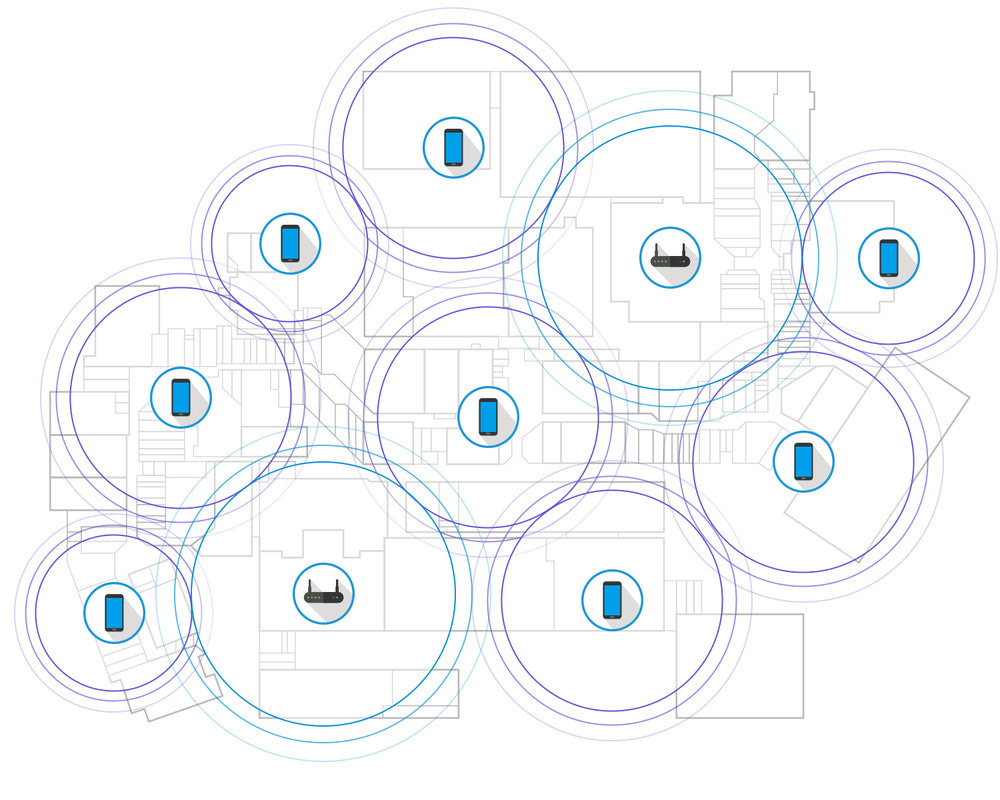
It was quite a novel idea, especially in 2016 when Kwon founded the business. His approach attracted interest: $1 million in grants from the South Korean government, angel funding, and early customers. Everland was among them, wooed by the potential to provide better wifi to its many park-goers.
In time, perhaps Anyfi might have been a success in its own right. But now, it feels significant only because of what it precipitated. As he sought to build the world’s greatest mesh networking service, Kwon began learning about blockchain. After all, many of the concepts he was applying through his startup connected to the budding crypto industry. As he investigated topics like “decentralization” and “peer-to-peer networks,” Kwon serendipitously began to fall down the rabbit hole. Soon, he was diving deep into the worlds of Bitcoin and Ethereum.
Kwon shifted focus. In 2017, along with college friend Nicholas Platias, he began to actively study the space, watching as the ICO boom blazed to life. Many seemed to be building applications on top of existing “currency” projects like Bitcoin, even though Bitcoin itself hardly functioned as a reliable medium of exchange. Maybe there was space to create a project that worked as an actual currency?